Navigation Bar

Monday, July 2, 2012

Mistletoe

A branch of mistletoe with its characteristic sticky white
berries. Source
     Mistletoe is a shrub that grows on the branches of a tree or a larger shrub and gets water and many of its nutrients from its host tree or shrub. The fruit is white and sticky inside and it usually has a single seed. The word "Mistletoe" comes from the Anglo-Saxon words mistel, which means "dung", and tan, which means "twig". It is so named because the seeds often spread through the droppings of birds who eat the white berries. Mistletoe may cause a formation on its host known as the Witches' Broom, which can bear a resemblance to the mistletoe plant itself.
     In ancient times many cultures throughout Europe valued mistletoe as having mystical powers and properties. The ancient Celts believed that mistletoe could cure sleeplessness, high blood pressure, and tumors, as well as barrenness in animals. They also believed it to be an antidote to any poison. Mistletoe has significance in Greek and Norse mythology as well. It is also traditionally used as a Christmas decoration in some countries and in many of these countries tradition follows that a man and a woman standing under a hanging of mistletoe are obliged to kiss.
     In the Harry Potter series, mistletoe has magical properties, and Luna Lovegood claims that it is often infested with nargles.
     In the Pottermore, mistletoe is used as an ingredient for the Antidote to Common Poisons and the Forgetfulness Potion.

Dueling in Pottermore

Petrificus Totalus, the Full Body-Bind, as used in a duel on Pottermore. Source
     In order to duel in Pottermore, you must have first received your wand from Ollivanders (Chapter 5Moment 4). To correctly perform a duel, you must click on the first letter or press its key on the keyboard; then, when the circle is at its largest, click or press again. When the white trailing line reaches the center of each letter, click it or press its key once for a circle to appear and once again when each circle is at its largest. After this is done for the last letter, you will be notified how well you performed and once both you and your opponent have finished your scores will be compared. Whichever one of you achieved the highest score will win, and if your opponent is from a different house the winner will receive 5 points for their house.
     The first trick to dueling is choosing the spell with highest possible score. Right now it is Petrificus Totalus, the Full Body-Bind, with the highest possible score of 145.

     The next most important trick is getting the rhythm down. The circle takes exactly three fourths of a second to grow to its maximum size, and the line takes three fourths of a second to travel between each letter. The most accurate method to get the rhythm down is to use a metronome. This online one works best for me. Set it so it matches the rhythm of the spell  (80 beats per minute), then click once every beat for each circle, and once every beat for the line that snakes between the letters. The rhythm for a perfect Full-Body Bind, for example, is like this (one beat per letter):

P P T T F F C C T T L L S S

Kind of like a horse clopping, isn't it? Now get out there and win some duels - unless you're not a Ravenclaw, in which case you really should just forget this post and never win a duel again.

Friday, June 29, 2012

Magic Wands

A scepter, a long rod used as a symbol of authority.
A scepter, a long rod used as a symbol of authority. Source
     The word wand literally means "a slender stick or rod", and was once commonly used as a word for any such object. The word itself comes from the Old Norse word vǫndr and its roots are similar to those of "wend" and "wind".
     Perhaps the beginning of the magical wands which are told of in stories today was the drumstick of the prerunners to modern doctors in ceremonies meant to heal, cure, or protect people. Another possible orgin is the use of supposed amulets in ancient societies to ward off evil, some of which had a wand-like shape. The idea also may have arisen from the scepter - a long rod or staff that symbolizes power. The earliest known mention of a magic wand as we think of them today was Circe's use of a wand in The Odyssey (a Greek epic poem) to turn a crew of sailors into swine. Starting in the middle ages many European folk tales also told of magical wands and they began to appear more frequently in stories, mostly owned by fairies.
     Contemporary authors began using the idea of magical wands in their stories as well, and once movies became a common form of entertainment magical wands also began to appear in movies.
     In the Harry Potter series (which also was an important factor in the increasing appearance of magical wands in literature) magical wands are thin wooden rods with cores of various magical substance. Wizards and witches use them to channel their magical power and cast spells. In addition, wands, having powerful magical substances as cores, will sometimes profess magic of their own.
     In Pottermore, you receive your magical wand in Chapter 5, Moment 4.

Cauldrons


A cauldron made in 15th century England.
A cauldron made in 15th century England. Source

     A cauldron is a large kettle used for cooking over a fire. The word itself has its earliest origins in Latin word calēre, which means "to be warm". The first known use of the word was in the 14th century.
     Since cauldrons were once a common household object, many folk tales have arose of cauldrons containing magical substances. Old Irish folk legends tell of leprechauns that kept their gold in cauldrons. Since cauldrons used to be used in everyday life for cooking, potions in folklore were often cooked or prepared in cauldrons. A popular example is the three witches in Shakespeare's play Macbeth, in which the three witches brew "a charm of powerful trouble" with several unorthodox ingredients.
     In the Harry Potter series, cauldrons are used primarily to brew potions and are usually like normal cooking cauldrons, although there are also accordion-like collapsible cauldrons and self-stirring cauldrons. First year students at Hogwarts are required to buy a pewter cauldron (most utensils and cookware was made of pewter in the middle ages) although they come in a variety of other materials as well.
     In Pottermore, cauldrons can be purchased at Potage's Cauldron Shop in Diagon Alley. They come in three types, Pewter Size 2 (15 Galleons) Brass Size 2 (21 Galleons) and Copper Size 2 (25 Galleons). pewter cauldrons brew potions the slowest, brass ones a bit faster, and copper ones the fastest. This is a reference to the use of copper and its alloys in ancient times as a medicine and as a liquid purifier. These practices arose because in real life, copper and many of its alloys (such as bronze) really do kill bacteria.

Friday, June 22, 2012

Bezoars

A Bezoar stone from Early Modern Northern Europe.
A Bezoar stone from Early Modern Northern Europe. Source


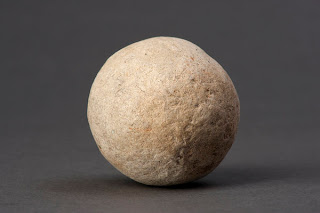
     The English word "bezoar" comes from the Persian word pâdzahr, which literally means "to expel poison". The bezoar as an object has gone through several incarnations, many of which together form the basis of the bezoars in the Harry Potter series.
     The belief began in the Arabian Peninsula from folk tales about a stones found by pools of water said to be produced in the eyes of the Bezoar Goat after it ate snakes and dipped its head in the pools to cool the heat that the venom caused. The stone was either ground up or put whole on injuries to help to cure them. The "oriental bezoar" formed in the digestive tract of this goat is still valued by some, and the idea that these goats can cure themselves from snake venom is still believed in certain parts of the Arabian Peninsula.
     Arab physicians later brought the legend to Europe and sold stones formed in the stomach and intestines of several different animals. Some were said to cure any poison while other physicians prescribed bezoars from specific animals for certain poisons. They were either ground up and mixed with other substances or simply dropped in glass to remove any poison that might be in it.
     In medical science today a bezoar is defined as "a mass found in the gastrointestinal system of an animal formed from compressed matter".
     In the Harry Potter series, "beozers" are stones from the stomach of a goat, a reference to Capra aegagrus aegagrus, the aforementioned Bezoar Goat, and are used, mostly in potions, to counteract poison, such as in the "Antidote to Common Poisons" brewed in Pottermore. If you need another one of these in Pottermore just go to the Hospital Wing (Chapter 17, Moment 2), zoom in all the way, and look in the ingredient shelf.